
Pretty Little Liars & Problematic Girl Power in Roald Dahl’s Matilda, “The Landlady”, and “Lamb to the Slaughter”
an exploration of how Matilda, the Landlady, & Mary all gain power through extreme acts or forces and what this common thread between the three reveals about how Dahl writes his female characters.

When one thinks of power in Roald Dahl’s literary catalogue, his zany children’s stories often come to mind as many feature rags-to-riches tales showcasing underdog protagonists who summon their inner power and prevail against domineering forces. Similarly, his short stories for adults also feature protagonists who pursue power to resist or reject oppressive individuals or systems. Despite stylistic differences and opposing intended audiences, an invisible string is evident in the shared theme of power between his children’s books and his adult stories. In Matilda, “The Landlady”, and “Lamb to the Slaughter”, Dahl presents the notion that girls and women can only truly achieve power in oppressive circumstances through extremities such as secrecy, deception, magic, and/or even murder.

Dahl’s 1988 Matilda features one of the few girl protagonists within his children’s bibliography. Matilda is a bright young five-year-old who, despite her “extraordinary qualities of brilliance”, is repressed intellectually, emotionally, and physically due to her negligent parents and tyrannical headmistress (Dahl, Matilda 114). Even before receiving a helping hand from her magical powers, Matilda refuses to continue living powerless under her parents and decides to take matters into her own hands. She “decide[s] that every time her father or her mother was beastly to her, she would get her own back” and justifies that “[a] small victory or two would help her to tolerate their nastiness and stop her from doing anything more drastic” (Dahl, Matilda 34). While Mr. and Mrs. Wormwood’s cruelty deserves punishment, it is necessary to recognize that enacting revenge is an extreme course of action for Matilda—particularly considering Dahl’s young audience. Dahl’s diction choices in this passage as Matilda rationalizes that her seemingly small punishments are preferable to her “doing anything more drastic” subtly suggests that Matilda is capable of committing harsher harm unto her parents but settles, instead, for acts of harmless hilarity (Dahl, Matilda 34). Matilda’s punishments for her parents are stylistically written to amuse young readers as she playfully super-glues her father’s hat to his head, borrows a parrot to prank her family into believing that their house is haunted, and adds dye to her dad’s tonic to bleach his hair an outlandish platinum-blonde.
![Matilda by Roald Dahl [UK FIRST EDITION / SECOND PRINTING]](https://substackcdn.com/image/fetch/$s_!FDrj!,f_auto,q_auto:good,fl_progressive:steep/https%3A%2F%2Fsubstack-post-media.s3.amazonaws.com%2Fpublic%2Fimages%2Ff1a58b3f-c9d8-43b1-b443-7a8eb3edd65d_1500x1500.jpeg "Matilda by Roald Dahl [UK FIRST EDITION / SECOND PRINTING]")
Each punishment grants Matilda a sense of power over her parents with readers as well as Matilda herself taking pleasure in her revenge. Dahl describes how her “safety valve…was the fun of devising and dishing out these splendid punishments” as Matilda views her vengefulness as a “new game” rather than a cautionary tale in that scheming for the sake of scheming may lead her to teeter on the line of resembling her parents (Dahl, Matilda 63, 62). Dahl’s amusing diction undermines the potential dangers for young readers in painting revenge as an innocent “game” whilst emphasizing the “fun [in] devising and dishing out”, albeit rightful, retribution nonetheless (Dahl, Matilda 63, 62). Although these punishments give Matilda a well-deserved dishing of power, she resorts to a Machiavellian sense of mischievousness and thus, to an extreme. Should Matilda be taking a page out of Napoleon’s playbook and rationalizing that “[t]he only sensible thing to do when you are attacked is, as Napoleon once said, to counter attack” (Dahl, Matilda 51). Rendering revenge as “sensible” to budding children, whether through Matilda’s inexperienced perspective or Dahl’s authorial narrative voice, is an extreme lesson in perhaps how not to pursue power rather than how to achieve it (Dahl, Matilda 51).
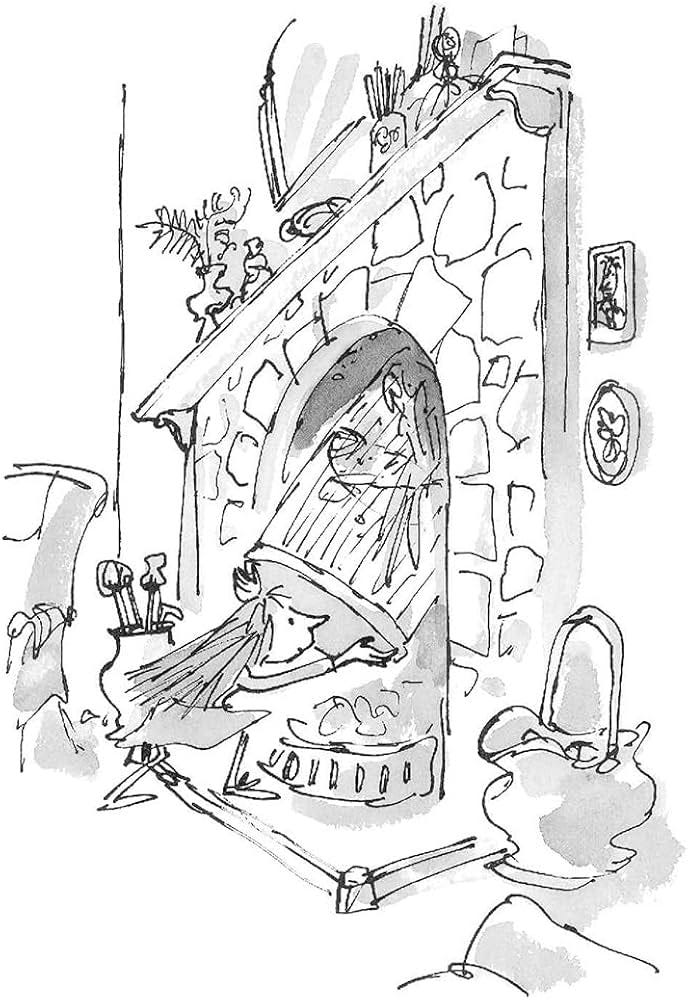
In addition to taking revenge, Matilda’s magical powers strongly aid her journey toward attaining power. When Matilda is finally allowed to attend school, she realizes that she has magical powers due to Mrs. Trunchbull’s tyranny over herself, her classmates, and her beloved Miss Honey. The Trunchbull’s dictatorship positions Matilda in more severe danger as she realizes that the prankish punishments she enacted on her neglectful parents are no match for the Trunchbull’s physical and mental strength. As Matilda faces strict abuse from the Trunchbull in the place in which she most longed to be—school—, her anger heightens to an unprecedented degree, a warning that “something was bound to explode inside her very soon” (Dahl, Matilda 242). Explode she does, as Matilda’s hatred for the Trunchbull incites “[a] sense of power brewing in those eyes of hers,” and escalates into “a feeling of great strength…settling itself deep inside her eyes” (Dahl, Matilda 243). One can almost physically feel the magical power summoning inside Matilda with Dahl’s descriptively enchanting diction like “brewing,” and “settling itself,” hinting as though her magic is a physical entity, a part of her that has only now made itself available to her out of absolute necessity (Dahl, Matilda 243).
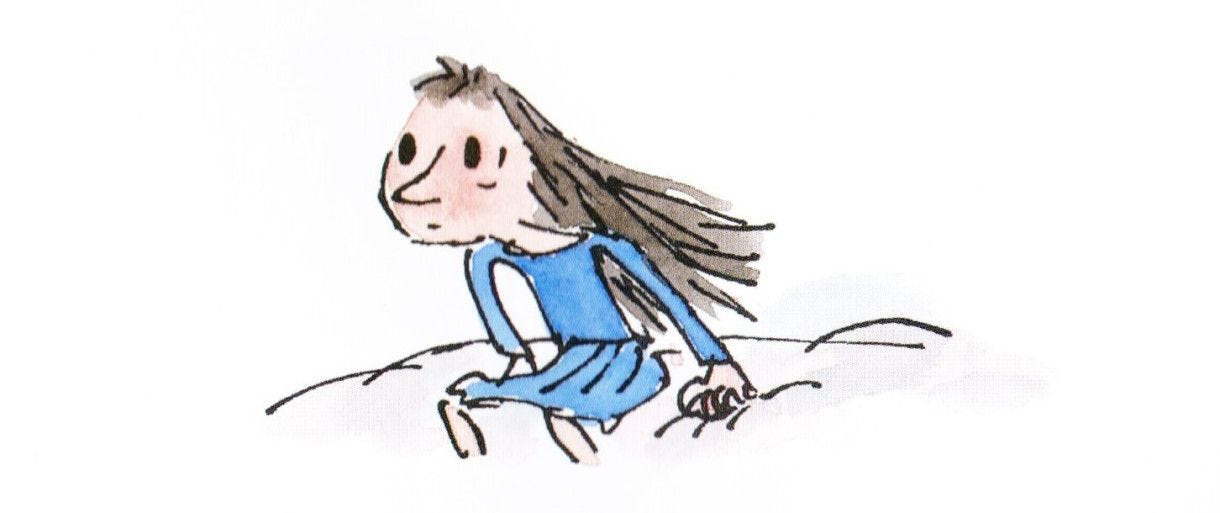
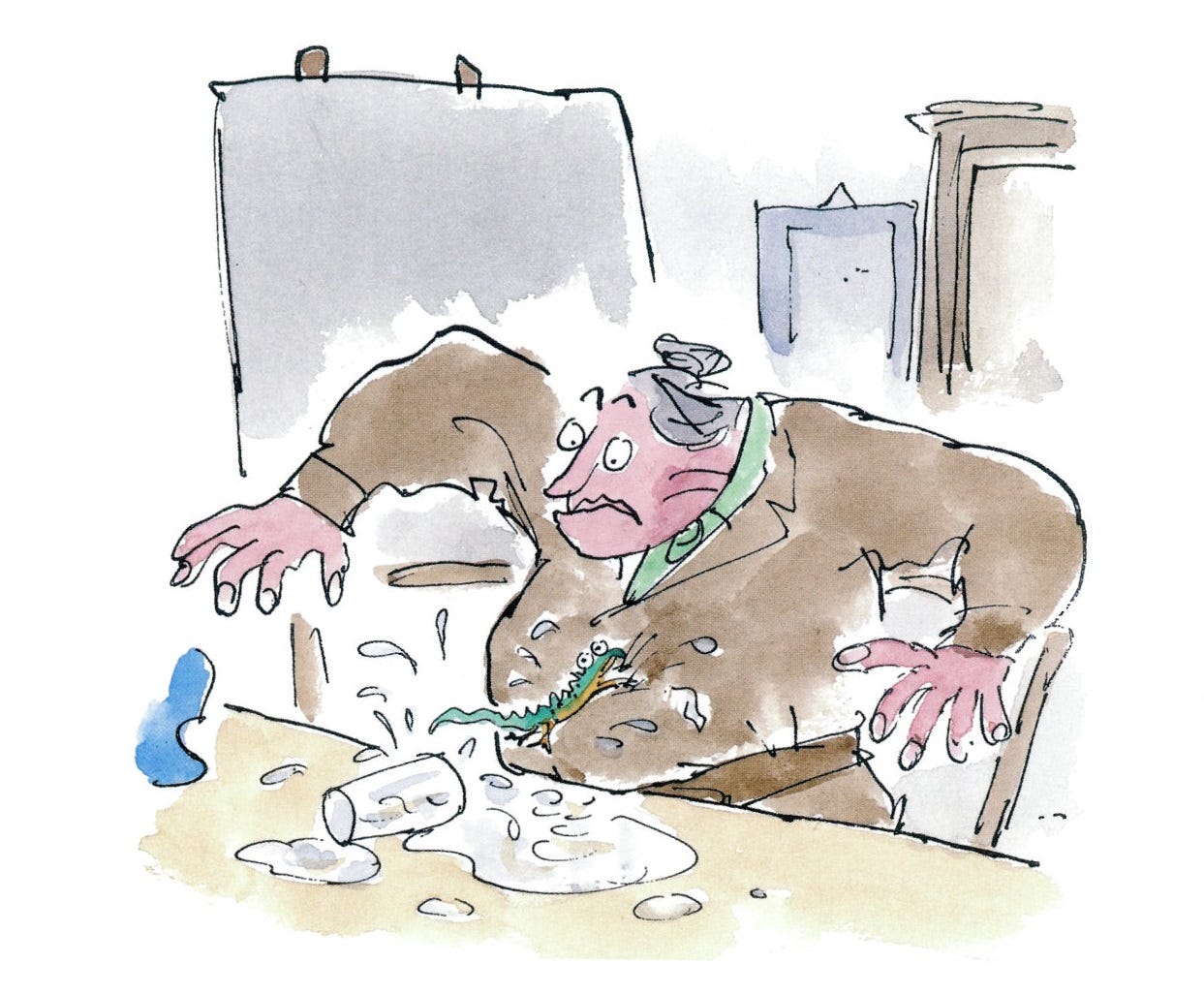
Additionally, Dahl makes it palpably clear to readers that Matilda’s magic is the main provider of her eventual power as he precisely points to the physical and mental “sense of power” that is conjuring within her (Dahl, Matilda 243). After successfully using her newfound telekinetic powers to tip over the newt-filled water glass all over Mrs. Trunchbull, Matilda recognizes “[a] strange sense of serenity and confidence…sweeping all over her” realizing that “all of a sudden she found that she was frightened by nobody in the world" (Dahl, Matilda 247-48).
With her magical powers, Matilda acquires a powerful sense of fearlessness that would have been impossible to gain solely through executing revenge. However, despite her ostensible invincibility, she never lets her powers go to her head. Instead, she utilizes her powers for good and cultivates justice for herself, Miss Honey, and all other underdogs made victims of Trunchbull’s autocracy. With her powers, Matilda forces Miss Trunchbull to give Miss Honey back what was stolen from her by telekinetically writing on the blackboard “Give my Jenny her wages [and]...the house then get out of here. If you don’t, I will come and get you…like you got me. I am watching you Agatha” (Dahl, Matilda 335).
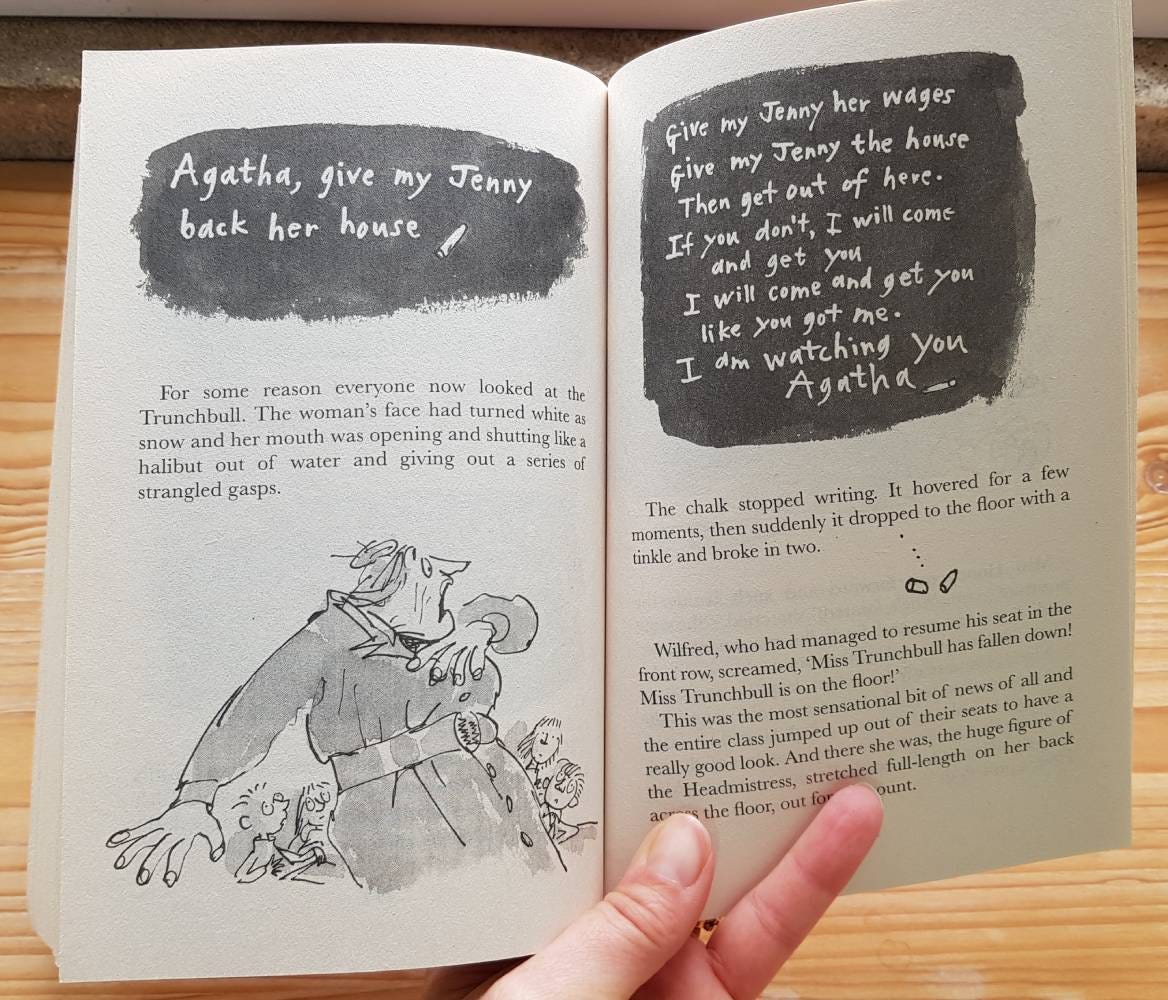
This extreme moment confirms Matilda’s power over the previously powerful Miss Trunchbull, symbolizing Matilda’s fearlessness toward authoritarian figures. Although Matilda loses her supernatural powers in the end, she by no means loses her material power as her self-assurance restores harmony in her life and ultimately, allows her story to conclude with a happy ending. Through Matilda’s magic, Dahl creatively crafts a spellbinding story for young readers who may see parts of themselves in Matilda to demonstrate how everyone, no matter how seemingly small or powerless, can discover a sense of power within themselves.
Matilda may be physically small, but she is mentally mighty—a characterization that Dahl purposefully creates to affirm his recurring theme that appearances are often deceiving. While Matilda’s deceptive appearance is far from sinister, her unassuming character enhances her power by allowing her to get away with her clever pranks on her parents and her magical interventions for Mrs. Trunchbull. Her parents continuously undermine her based on her gender, young age, and immature mind. Despite her sharp intellect from an extraordinarily young age, her parents tell her “that small girls should be SEEN and NOT HEARD” (Dahl, Matilda 6). When Matilda effortlessly answers her father’s mathematical question correctly, he shouts that “[n]o one in the world could give the right answer just like that, especially a girl!” (Dahl, Matilda 71). Mr. Wormwood’s promotion of patriarchal ideals and Mrs. Wormwood’s internalized misogyny shine through in their shared belief that Matilda should be submissive and obedient to the demands of those older and more powerful than her. Mr. Wormwood’s disbelief at his daughter’s arithmetic ability displays his unwillingness to accept Matilda’s wisdom and thus see beyond her gender and age.
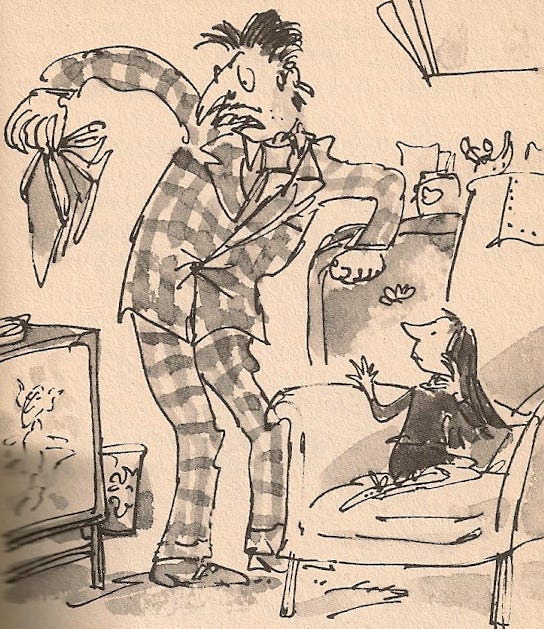
Even Miss Honey initially doubts Matilda when she openly confesses her magical powers, chalking her revelation up to “how often small children have flights of fancy like this” (Dahl, Matilda 256). As a result of Miss Honey’s disbelief, Matilda is forced to physically prove herself and tip the glass again to validate her magical powers by urging Miss Honey to witness the magic firsthand. With Matilda being repeatedly undermined and therefore constantly feeling the need to prove herself in front of authority figures, Dahl engages with his young audience by narrating common childhood experiences. Since many young children can relate to adults not believing them or having to prove their competence, Dahl’s theme that appearances can be deceiving hits close to home for readers as he proves through Matilda’s actual power juxtaposed with the Wormwood’s and the Trunchbull’s powerless adult absurdity that one’s age does not reflect one’s ability.
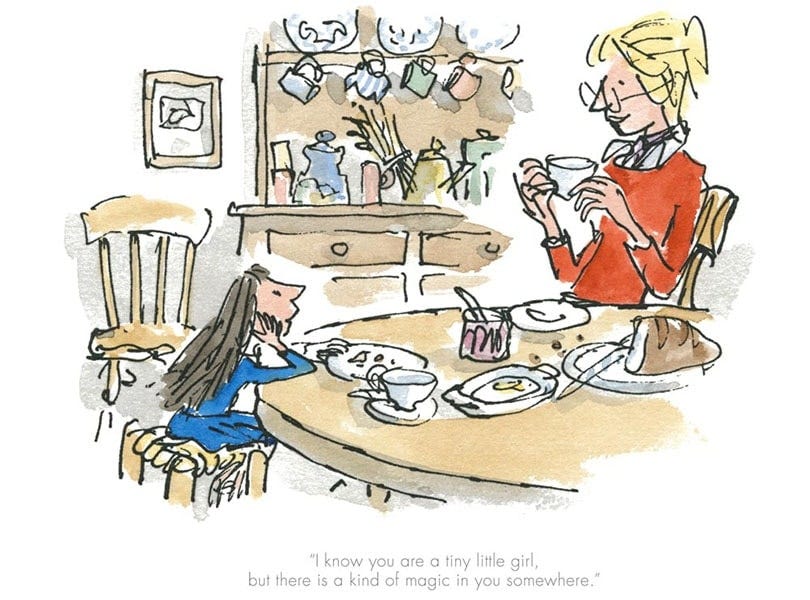
Although Matilda had to resort to extremes by taking revenge, pranking her parents, and using her magical powers to scare Miss Trunchbull, she only utilizes this power to strive for moral justice. Dahl’s theme of power in Matilda proves to children that sometimes one must use the power given to them to prioritize their happiness. While Matilda’s actions may not seem extreme, especially in comparison to the following two women presented, the matters of portraying revenge on one’s parents as fun, and engaging with supernatural powers to threateningly write “I will come and get you” to Miss Trunchbull read as rather extreme for Dahl’s younger audiences (Dahl, Matilda 335). Despite her extreme course of action, Dahl proves to children readers that all kids should strive toward finding strength and personal power.

In contrast to his positive portrayals of kids gaining well-deserved power in his children’s stories, Dahl’s short stories for adults paint a darker portrait of female power which, as my essay proves, becomes paired with violence. In “Understanding the Significance and Purpose of Violence in the Short Stories of Roald Dahl”, Suneel Mehmi explores Dahl’s fascination with violence in his adult stories, explaining how Dahl portrays violence as all of the following: “moral, sadistic and anti-social, purely aesthetic, or chaotic and existential” (Mehmi). My analysis of “The Landlady” and “Lamb to the Slaughter” will expand upon Mehmi’s list to include violence as power. Existing solely in Dahl’s adult tales, the theme of violence as an extension of power is evident through the Landlady and Mary’s paths of physical violence—more specifically, in both their shared rejection of oppressive systems and attempts at depowering their male victims to empower themselves.
In his 1959 short story “The Landlady”, Dahl depicts a secretive, sinister Landlady who eases young male guests with traditional feminine hospitality into staying at her deadly bed and breakfast—a choice irreversible upon entering as no guest survives the night long enough to rest in bed, nor eat morning breakfast. The Landlady finds agency and power in running her (albeit, problematic) bed and breakfast business, thus reversing conventional power dynamics as she lethally strips her residents of their male power by suggestively poisoning and killing them to pursue her feminine power against patriarchal power structures.
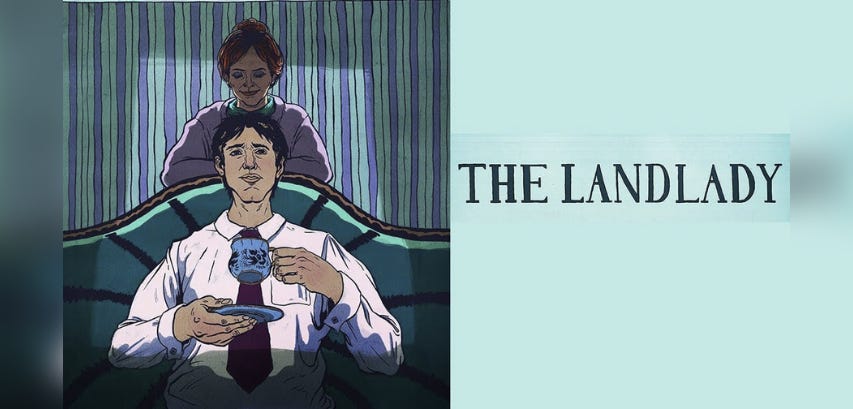
In a more spooky rather than silly interpretation of Dahl’s theme that appearances are deceiving, readers experience alongside Billy as he increasingly recognizes that his intuition has been disingenuously influenced by the Landlady’s outward deception, and has misled him.
As Billy first notices the Landlady’s alluring bed and breakfast, Dahl situates readers in a position equally as unassuming as Billy initially is, to emphasize that not all is as it appears. Dahl writes Billy’s seemingly sound judgement to relate with adult readers as many adults employ rationality to accurately assess a questionable situation. Furthermore, it is common to perceive external agreeableness as confirmation of correspondingly internal pleasantness. As such, Billy finds many rationalizations for staying at the Landlady’s inn, falling right into the Landlady’s intentionally comforting trap that she cunningly creates. Many reassuring objects are placed to paint this perfect picture as Billy observes the “vase of pussy-willows,” “bright fire,” “pleasant furniture,” “pretty little dachshund,” and “parrot” (Dahl, “Landlady” 174). Gaining solace from the presence of animals, Billy acknowledges that “[a]nimals were usually a good sign in a place like this” (Dahl, “Landlady” 174).
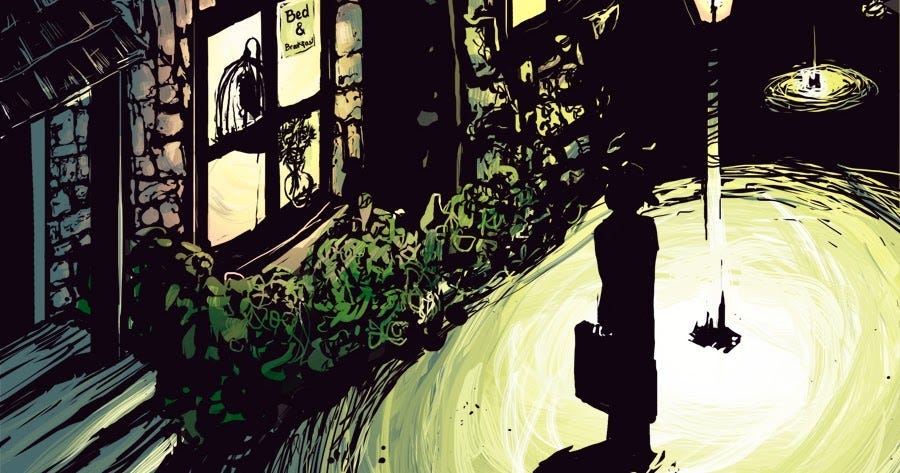
However, tensions rise as the Landlady opens the door surprisingly fast—as though she is waiting for him—, names in the guestbook are fearfully familiar and suggest disappearances, his room is ready for him without any preparation, and the cost is suspiciously cheap. In recognition of the aforementioned concerns, Billy continually tries to calm his anxieties by reaffirming that the Landlady’s outward appearance is far from frightening and her demeanour is “terribly nice…[as] she looked exactly like the mother of one’s best school-friend welcoming one into the house” (Dahl, “Landlady” 177). By using diction to characterize the Landlady as a best friend’s welcoming mother, Billy attempts to find a familiarity with the woman, likening her to a known figure of friendliness. Moreover, he regards the Landlady as “harmless”, likely due to the assumption that she, as an older woman, holds supposedly less strength and power than a young man, and thus is capable of no such crime (Dahl, “Landlady” 179). Since the Landlady has once again captivated another victim’s attention and vulnerability with her alluring appearance, she has gained power due to her determined deception.
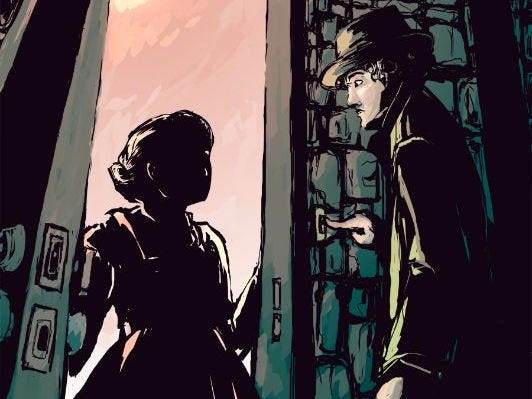
As the story progresses and appearances become deceptive, the Landlady’s secrecy is revealed as another method to her madness and maintenance of power. Notably, the Landlady is one of only two characters in Dahl’s short story, yet she is never named. Dahl’s choice dehumanizes the Landlady’s character by conveying a sense of impersonality and invoking a mysterious sense of secrecy. Although Billy becomes aware that “[t]he old girl was slightly dotty” and “off her rocker”, his acknowledgment comes too late as she reveals the secrets that sustain her deceptive appearance—a sign suggesting that once Billy learns of her secrets, she must begin her poisoning process to ensure he does not live to caution other young men against staying with her (Dahl, “Landlady” 177, 179). She admits that her previous two male guests “never left” and admits that “[t]hey’re on the third floor,” implying that their bodies are either locked away in a room or beneath the floorboards (Dahl, “Landlady” 177, 182). In another moment of revelation, she confesses: “I stuff all my little pets myself when they pass away”, rendering Billy’s reassurance regarding her animals as dangerously ironic (Dahl, “Landlady” 184, original italics). Finally, as the Landlady plays the part of the domestic and comforting homemaker, she exploits her femininity to manipulate Billy into drinking a cup of tea she has made for him. In one of his final lines, Billy remarks how “[t]he tea tasted faintly of bitter almonds” (Dahl, “Landlady” 184). Although it is never directly stated by Dahl, he suggests that the tea is poisoned with cyanide, as cyanide is “described as having a ‘bitter almond’ smell” (National Center for Environmental Health). Through the Landlady’s manipulation of her traditional feminine appearance and secrecy surrounding her business, Dahl showcases the villainous extremities to which women will go to achieve power over men.
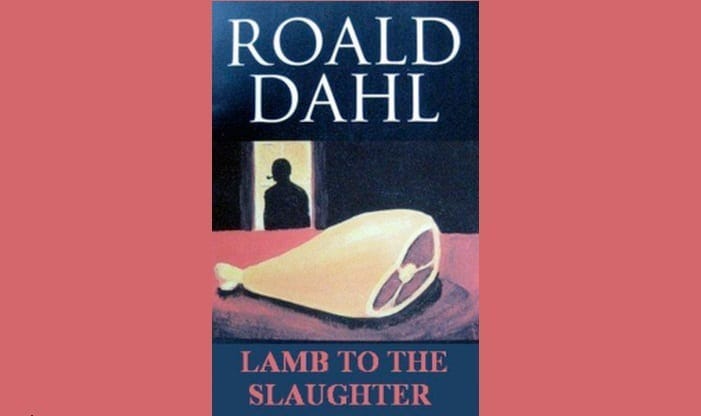
Like “The Landlady”, Dahl creates another formidable female character in “Lamb to the Slaughter” who similarly murders a man to achieve her power. Mary Maloney holds little power as a pregnant housewife to her husband, Patrick—a woman likely relatable to many adult readers in the 1950s. Yet in a horrific reversal of the powerless housewife trope, Mary becomes a cautionary tale to readers. When Patrick inexplicably and continuously rejects her feminine offerings of nourishment and ostensibly reveals that he is leaving her, Mary feels left with no other option than to inflict violence upon her husband-no-more and take back the power that his divorcing her has stripped her of. Resultantly, she knocks him dead with the frozen leg of lamb she had intended to feed him with. Mary’s choice of murder weapon is highly satirical as it proves how she is no longer concerned about caring for her husband and now acts only in self-preservation.
![bare•bones e-zine: The Hitchcock Project-Roald Dahl Part One: "Lamb to the Slaughter" [3.28]](https://substackcdn.com/image/fetch/$s_!t-pa!,f_auto,q_auto:good,fl_progressive:steep/https%3A%2F%2Fsubstack-post-media.s3.amazonaws.com%2Fpublic%2Fimages%2F11d4d20a-a3ad-4a6f-95e8-e4165ef70e0a_720x540.jpeg "bare•bones e-zine: The Hitchcock Project-Roald Dahl Part One: \"Lamb to the Slaughter\" [3.28]")
While one would think Mary to be rightfully hysterical after such a grisly act, Mary mirrors the Landlady as both remain unnaturally calm. Dahl describes how “[i]twas extraordinary…how clear her mind became all of a sudden”, interestingly as now without a man in her life, she is finally able to think clearly (Dahl, “Lamb” 26). Mary’s diction implies that having a husband who made every decision negated her ability to think for herself; with his death, it has returned. Even despite Mary’s awareness of her potential punishment, “[i]t made no difference to her. In fact, it would be a relief” (Dahl, “Lamb” 26). The diction choice “relief” symbolizes a physical and emotional alleviation from her feminine duties as she would rather be in prison than have to live another day as a traditional housewife (Dahl, “Lamb” 26).
Mary Maloney’s deceptively powerless appearance enables her vindication as a suspect in her husband’s murder. Her husband has no suspicions surrounding his wife and thus does not see the violent blow to his head coming. In a violent pursuit of independence from her husband, Mary gains the power to foster an identity outside of her husband and her household obligations. Moreover, Mary successfully controls her appearance and deceives the detectives by playing the role of the hysterical housewife as “[t]hrough her sobbing she heard a few of the whispered phrases—”...acted quite normal…[...]...impossible that she…” (Dahl, “Lamb” 29). The detectives’ collective unwillingness to suspect a seemingly powerless woman to be capable of an act mirrors the Landlady’s ability to go unsuspected. For a woman, acting hysterical is perceived as more “normal” than holding enough power to commit these sinister acts of violence (Dahl, “Lamb” 29). Mary manipulatively maintains an innocent feminine appearance and has no issue lying to keep her dark secret.
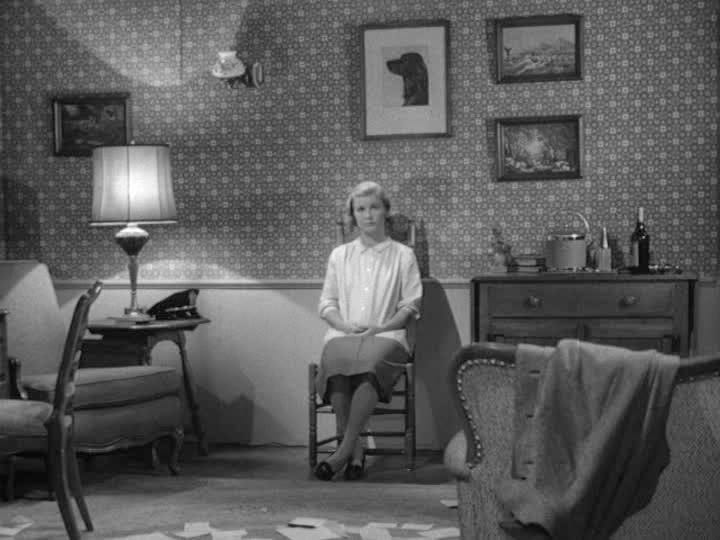
As her dead husband’s fellow detectives scavenge the house for clues, Mary cleverly offers them the murder weapon for dinner, insisting out of pure feminine hospitality that Patrick would never forgive [her]...if [she] allowed [them] to remain in his house without offering [them] decent hospitality (Dahl, “Lamb” 32). In a twisted ending, Mary holds all the power over her dead husband and the male detectives as she schemingly outwits them all. Dahl ensures that readers know who has won in the end as his short story concludes with Mary giggling in the other room, aware that she will go unsuspected and can live independent of the man and the oppressive systems that have rendered her powerless for far too long.
![bare•bones e-zine: The Hitchcock Project-Roald Dahl Part One: "Lamb to the Slaughter" [3.28]](https://substackcdn.com/image/fetch/$s_!jAUR!,f_auto,q_auto:good,fl_progressive:steep/https%3A%2F%2Fsubstack-post-media.s3.amazonaws.com%2Fpublic%2Fimages%2Fa7d90eb9-1d13-43a4-a0b0-5293f0ca75fe_720x540.jpeg "bare•bones e-zine: The Hitchcock Project-Roald Dahl Part One: \"Lamb to the Slaughter\" [3.28]")
Like the Landlady, Mary Maloney also commits her crimes in a home. As the home is a traditionally feminine space, the Landlady and Mary’s choice of crime scene symbolizes a rejection of conventional feminine values and ideals. Both women likewise attempt to distract their future victim by offering them nourishment, tea in the Landlady’s case; a beverage, and a meal in Mary’s instance, creating a satire on domestic hospitality. Also notably, neither the Landlady nor Mary are suspects in their crimes—likely because no one believes these hospitable, domesticated women of such violent crimes. As unlikely suspects, both women maintain their power over the men they have killed and the men who remain unsuspicious of them.
In his imaginative children’s stories and his black-comedy adult short stories, Dahl uniformly portrays how deceptive appearances and secrecy pervade and promote the common thread of power. In Matilda, “The Landlady”, and “Lamb to the Slaughter”, Dahl remains true to his signature hyperbolic, comically-absurd, and imaginative style. Yet, despite the shared theme of power between the three stories, his portrayals differ in severity depending on his target audience. Matilda gains power through playful pranks and magical powers, optimistically suggesting to young readers that they are more powerful than they think. In contrast, the Landlady and Mary pursue power through violent acts against men to reject traditional femininity and patriarchal systems. Although Matilda, the Landlady, and Mary all appear to be the winners in the end as they have gained agency and emancipation, Dahl maintains the notion that all three female characters must resort to extremes to gain power against oppressive forces.
thank you for reading my literary library. your support never goes unrecognized or unappreciated. as always, if you have anything to add to the conversation: comments, questions, praise, contrarian perspectives… don’t hesitate!
from my heart to yours, kara koblanski. <3
“Cyanide: Exposure, Decontamination, Treatment.” National Centre for Environmental Health. 7 Feb. 2023, https://www.cdc.gov/chemicalemergencies/factsheets/cyanide.html.
Dahl, Roald. Matilda. Puffin, 2023.
Dahl, Roald. “Lamb to the Slaughter.” Tales of the Unexpected, Vintage, 1990, pp. 21-33.
Dahl, Roald. “The Landlady.” Tales of the Unexpected, Vintage, 1990, pp. 173-184.
Mehmi, Suneel S. “Understanding the Significance and Purpose of Violence in the Short Stories of Roald Dahl.” PSYART, 18, 2014, 204--229.